Analysis
Music can express what words and images can’t. In La La Land, it does just that. Blending jazz-inspired melodies, lyrical metaphor, and parallels to classic musicals like Singin’ in the Rain, the film’s soundtrack plays a central role in telling a story about ambition, love, and letting go. As a film minor and Los Angeles resident, I’ve felt a personal connection to this film’s emotional arc.
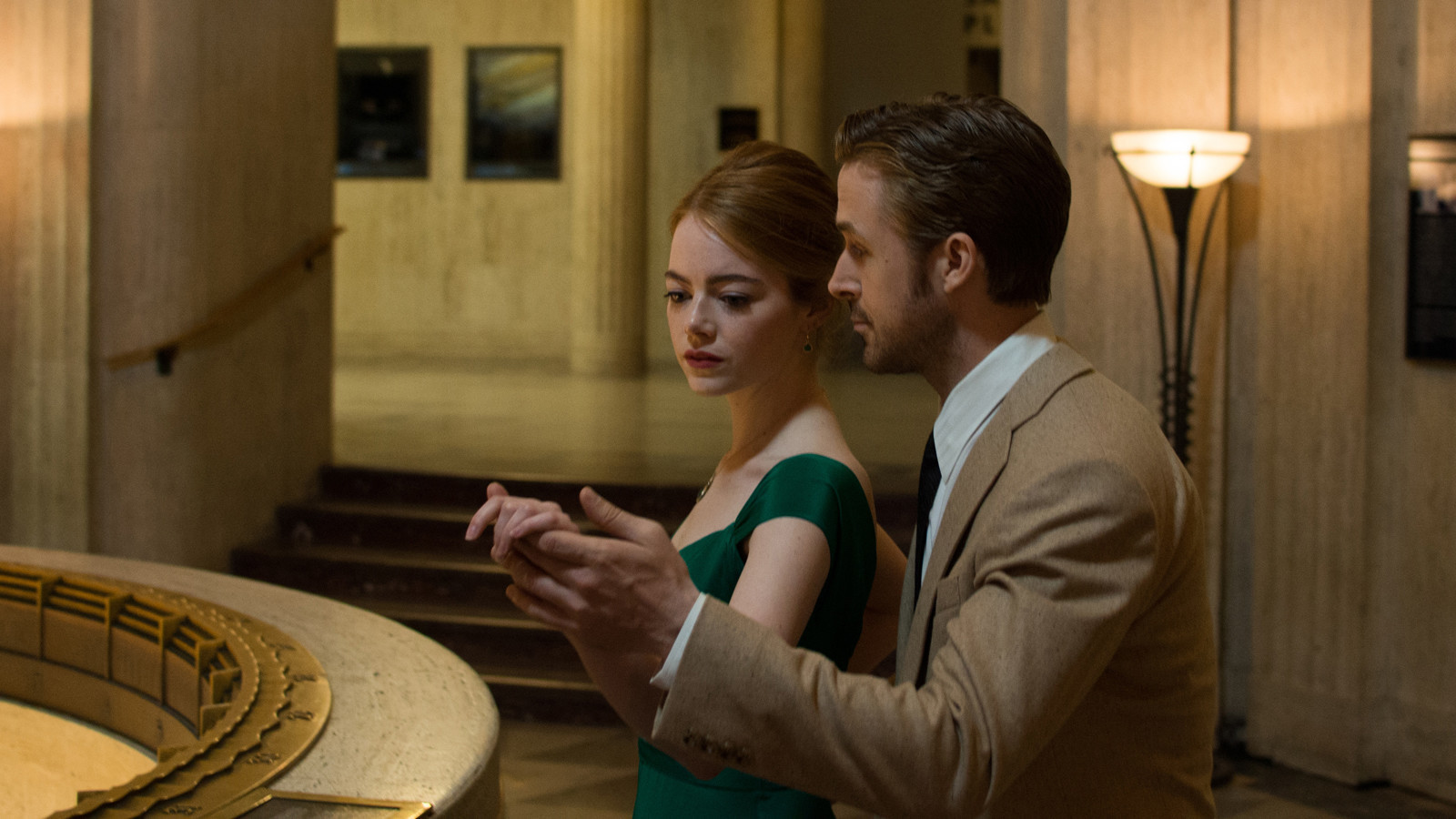
This project explores how La La Land’s music encodes emotional meaning and cultural commentary, using a range of digital humanities tools including waveform analysis, AI transcription evaluation, and Google NGram metadata visualization. Each method reveals different layers of the film’s soundtrack: from its structural role in narrating the characters’ emotional journeys, to its cultural positioning as a revivalist but also revisionist work, this project asks how music communicates what visuals alone cannot. It also raises critical questions about what gets preserved, altered, or erased when classic forms are brought into contemporary contexts. Through this multifaceted analysis, I argue that La La Land’s soundtrack serves not just as a mood-setting background but as a central vehicle for storytelling, cultural memory, and emotional resonance.
Hollywood Nostalgia and Emotional Encoding
A key part of La La Land’s soundtrack is how it intentionally pays tribute to classic Hollywood musicals from the past. As Anthony Carew notes, the film channels the aesthetic of classic films like The Umbrellas of Cherbourg and Singin’ in the Rain (Carew). This stylistic referencing contributes to a dreamy, romanticized atmosphere that resonates deeply with viewers, while also situating the soundtrack within a long tradition of cinematic storytelling through music.
The interactive timeline above shows important films that shaped the Hollywood musical, leading up to La La Land. Looking at these key examples, we can see that La La Land is not just bringing back old styles. Instead, it’s updating them. It keeps familiar elements like colorful visuals, dance numbers, and musical storytelling, but it adds modern themes like career goals, emotional distance, and hard choices. Jazz isn’t used just for nostalgia, but it’s also part of how the film shows the characters’ emotions and conflicts. Instead of repeating what older musicals did, La La Land uses the genre in a new way that fits modern day’s stories and audiences.
La La Land and Cultural Patterns
To map how the film’s themes align with broader cultural patterns, I ran a series of Google NGram analyses.

Figure 1. Emotional and Cultural Vocabulary in Literature (1900–2022)
This NGram visualization tracks the frequency of several emotionally and culturally significant terms—love, dream, dreams, ambition, jazz, and nostalgia—in English-language books from 1900 to 2022. The data shows a clear increase in the use of love, dream, and dreams in recent decades, pointing to a growing cultural focus on personal emotion, aspiration, and romantic ideals. In contrast, jazz, ambition, and nostalgia show more subtle patterns. Jazz peaked in the mid-20th century and saw a slight resurgence after 2000, while nostalgia has gradually increased. These trends align closely with La La Land’s narrative, which centers on themes of longing, emotional depth, and the pursuit of artistic passion.

Figure 2. Cultural Tradeoff Between Jazz/Nostalgia and Ambition (1900–2022)
A second chart compares the combined frequency of jazz and nostalgia against ambition to examine how artistic and emotional values have shifted in relation to personal achievement. The data reveals two peak points in the cultural emphasis on jazz and nostalgia: one in the late 1950s and another around the early 2000s, when emotional and artistic themes were more common. In more recent years, however, ambition has become more dominant, reflecting a broader cultural move toward individual success and goals over pure feelings.
These two graphs, taken together, offer a broader historical lens on the emotional and thematic tensions that La La Land dramatizes. The film’s central conflict between dreams and love, ambition and connection, is not just personal but reflective of long-term cultural shifts. As ambition rises, emotions like nostalgia and love can feel like they’re getting pushed aside. The film uses jazz and old Hollywood musical styles to bring those feelings back, making the soundtrack feel both timeless and deeply personal. In this way, La La Land doesn’t just tell a love story. Instead, it shows how music can express what people are feeling in a changing world.
Music as Structural Storytelling
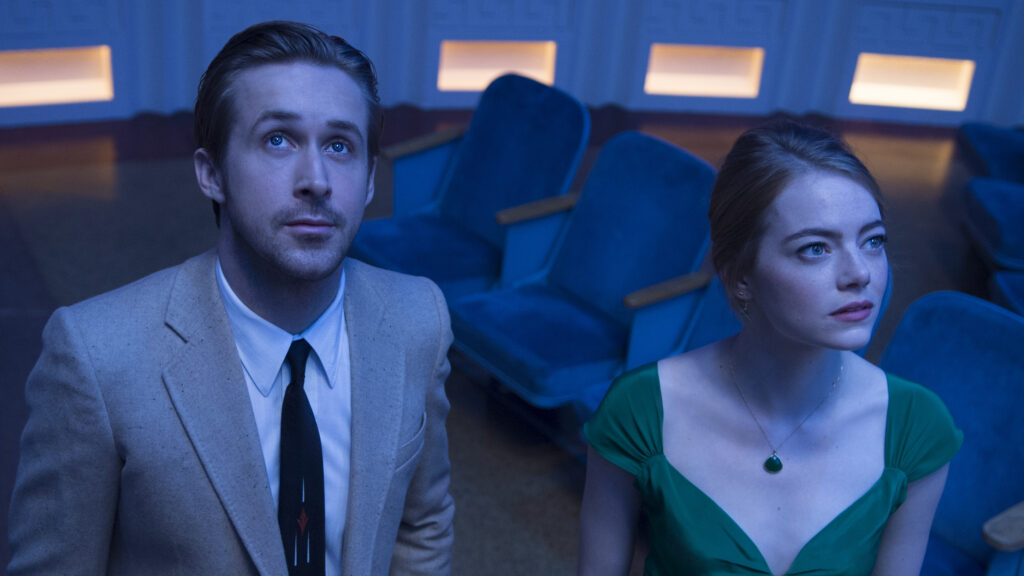
La La Land‘s music is not just emotionally resonant; it structurally reinforces the film’s narrative progression. One clear example is “Mia & Sebastian’s Theme,” a piece of music that is played repeatedly during important emotional moments in the film. Using Audacity, I conducted a waveform and frequency analysis of this 98-second clip. The waveform (Figure 3) shows how the music slowly builds in intensity, matching the emotional journey of the characters in the film.

Figure 3. Waveform Graph of Mia and Sebastian’s Theme, Audacity
The waveform reveals a gradual increase in amplitude and density, moving from a soft solo piano to a richer sound with more instruments involved. In the first 30 seconds of the track, the amplitude remains low and waveforms are widely spaced, with visible long gaps between each slow note. This reflects qualities associated with emotional restraint and introspection, aligning with the early ambiguity in Mia and Sebastian’s connection. By the midpoint around the 50 second mark, the waveform shows taller, denser peaks, indicating a rise in volume and complexity, corresponding to moments of emotional convergence between the characters. This dynamic range reflects their growing intimacy and later, the complexity of their emotional parting.
Motif repetition is also visible in the waveform through clusters of similarly shaped amplitudes. These repeated, cyclical patterns mirror the cycle of separation and reunions of the film’s main characters. Greg Smith offers a track-by-track breakdown that confirms how each musical cue is tied to specific narrative beats (Smith). From before they met, to when they’re in a relationship, to after they part, somehow they always find their way back to each other for different reasons. Even without visuals or dialogue, this waveform represents their bittersweet story well. For example, the final sequence shows Sebastian playing Mia and Sebastian’s Theme again in his Jazz club. The music brings back familiar melodies in slightly changed forms, showing how some feelings and memories stay the same while others have changed or faded. It helps the audience feel the emotional cycle of remembering, longing, and letting go.
Additionally, the frequency patterns of this same track also visually mirrors the emotional arc of the film.


Figure 4. Opening Sequence Frequency Analysis Figure 5. Closing Sequence Frequency Analysis
The opening section centers around 122 Hz, with sparse high-frequency content, conveying calm and vulnerability (Figure 4). There are no sharp spikes or high tones, reflecting the quiet, tentative beginning of Mia and Sebastian’s relationship, full of daydreams and emotions. In contrast, the closing section features a broader spectrum with a shift toward brighter, higher-pitched tones (Figure 5). This musical intensity echoes the emotional climax of the film, where both characters have achieved their dreams, but not together. The music captures that feeling of “what could have been,” while honoring what was. The soundtrack plays a central role in communicating the film’s emotional resolution. It tells us that even though Mia and Sebastian didn’t end up together, their shared dream lived on through the music.
Bias in Transcription: Whisper and Musical Language
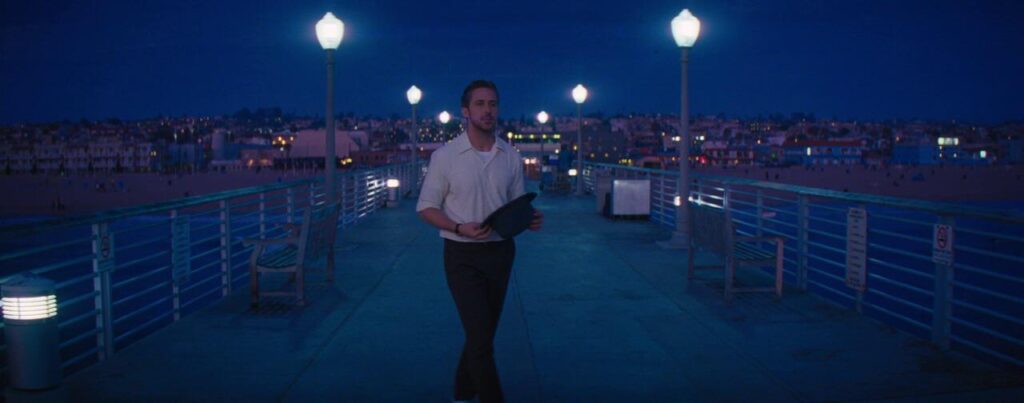
Lucía Garde Lucas argues that the emotional depth of La La Land is largely communicated through metaphor-rich lyrics that blend poetic structure with musical phrasing (Garde Lucas). For example, recurring references to stars, dreams, and dance serve not just as plot devices but as symbols that reflect the characters’ hopes, uncertainties, and emotional growth. These lyrical metaphors help build emotional continuity, linking separate moments in the film into a cohesive inner world shaped by longing and imagination.
To test how well this kind of musical language can be captured by machines, I used OpenAI’s Whisper model to transcribe the song “City of Stars.”

Figure 6. Whisper Transcription (left) vs Official Lyrics (right) of City of Stars
While the transcription was technically accurate (with a Word Error Rate of 0.0764, or a 92.36% accuracy), it failed to preserve the expressive quality of the lyrics. Whisper merged distinct lines, replaced metaphorical phrasing with literal speech, and expanded contractions, like “you’ll” into “you will.” These issues reveal that AI models trained on natural speech struggle to understand musical expression. Current AI audio models seem to be optimized for natural, non-musical speech. In songs, timing, rhythm, and emotional delivery often matter more than grammatical rules. This inability to grasp expressive contexts, even with low WER (could be because it’s a relatively short song), reflects the failure to preserve the song’s intended emotional nuance.
These insights point to a larger truth: La La Land’s soundtrack communicates emotion in ways that resist mechanical parsing. Emotional meaning, as Garde Lucas shows, requires human sensitivity to interpret. AI tools like Whisper remind us that while machines can replicate words, they often miss what those words are meant to make us feel.
Styling the Soundtrack: Jazz Between Aesthetic and Erasure
La La Land’s use of jazz works on two levels. Stylistically, it draws from a long tradition of improvisational music to shape both its sound and its storytelling. Ideologically, it engages with the question of what jazz means in a modern cinematic context. The film helps reintroduce jazz into mainstream cinema, reviving a genre that has largely faded from major commercial soundtracks.

Figure 7. Ratio of Musical/Jazz Discourse to Celebrity/Studio Discourse (1900–2022)
This NGram chart shows a long-term decline in references to “musical” and “jazz” relative to “celebrity” and “studio” in published books. The widening gap underscores La La Land’s effort to re-center artistic expression in an era dominated by commercial spectacle and celebrity culture. In other words, the film uses jazz not just to create a nostalgic mood, but to show that it still has artistic importance today.
However, La La Land’s celebration of jazz also raises concerns about cultural erasure. The graph below illustrates how mentions of “jazz music” have increased steadily since the 1980s, peaking around 2020. In contrast, references to “Black jazz” or “white jazz” remain extremely rare throughout the same period. This suggests that although jazz is frequently discussed, it is often framed in race-neutral terms, detached from its historical and cultural roots.

Figure 8. Mentions of “jazz music,” “Black jazz,” and “white jazz” in English books (1900–2022)
This lack of racial attribution aligns with Krin Gabbard’s critique: she argues that La La Land romanticizes jazz while disconnecting it from its African American origins (Gabbard). In the film, jazz is presented as a universal, apolitical language. But this framing risks flattening Jazz’s complex history and turning a deeply rooted Black American art form into an aesthetic without context. The disconnect between the cultural visibility of jazz and the near absence of racial qualifiers in the data reflects a broader issue of historical erasure. In celebrating the sound of jazz without acknowledging its origins, La La Land echoes this trend—honoring the music’s form while sidestepping its context.
Conversely, scholars like Hannah Lewis offer a more balanced interpretation. Instead of focusing on what La La Land leaves out, she explores how the film uses jazz structurally to tell its story (Lewis). In her view, jazz here is not just a soundtrack, but a storytelling device. Its improvisational form mirrors the unpredictable arc of Mia and Sebastian’s relationship. Their emotional journey is nonlinear, full of missed chances and altered paths, which is just like a jazz solo that bends away from expected notes.This connection is especially clear in the film’s final dream sequence. As the characters imagine an alternate version of their lives, the soundtrack brings back familiar melodies in slightly altered, but still recognizable forms. These changes reflect both continuity and loss. Lewis argues that this musical structure allows the film to express emotional complexity: longing for what could have been, while recognizing what actually is. Rather than simply copying old jazz styles, La La Land adapts jazz as a tool for exploring modern themes like ambition, memory, love, and compromise.
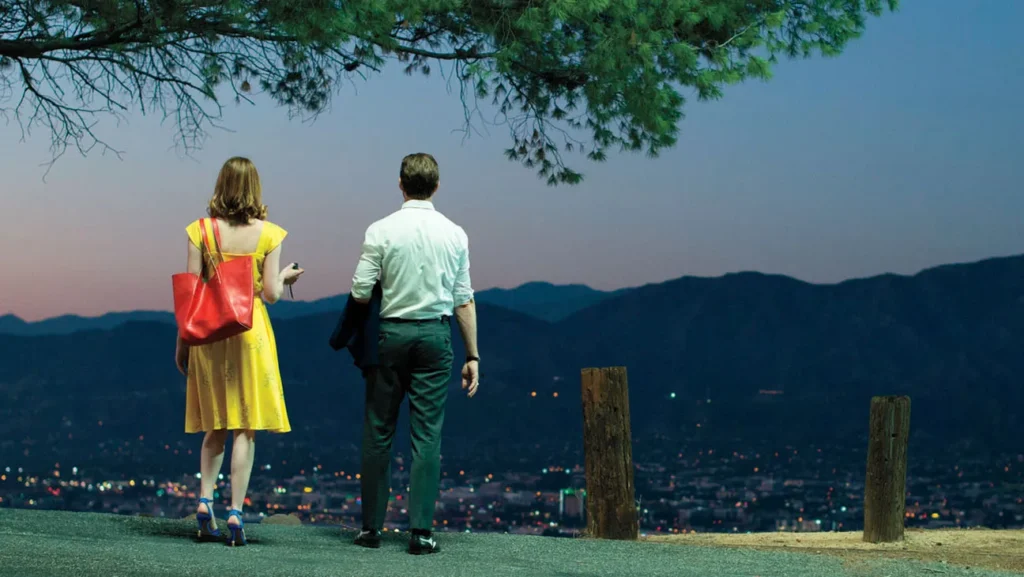
La La Land’s soundtrack does more than being the background music in the film, it also plays a key role in telling the film’s story. Through repeated themes, poetic lyrics, and jazz-inspired composition, the music helps to tell a story that words and visuals alone could not fully capture. By using digital tools like waveform graphs, transcription models, and NGram data, this project shows how the soundtrack functions as both a storytelling technique and a reflection of broader cultural patterns. However, it is worth noting that the film’s use of jazz reveals an important tension between honoring jazz’s musical style and overlooking its history. On one hand, it honors an artistic tradition and helps bring jazz back into mainstream cinema. On the other hand, it risks separating the music from its cultural and racial history. Still, La La Land uses jazz in a way that fits the characters’ emotional journeys and adapts to express modern dilemmas—ambition, memory, and love lost to time. In analyzing the film through both technological and critical lenses, we see that its soundtrack doesn’t just reflect feeling. It creates it.